
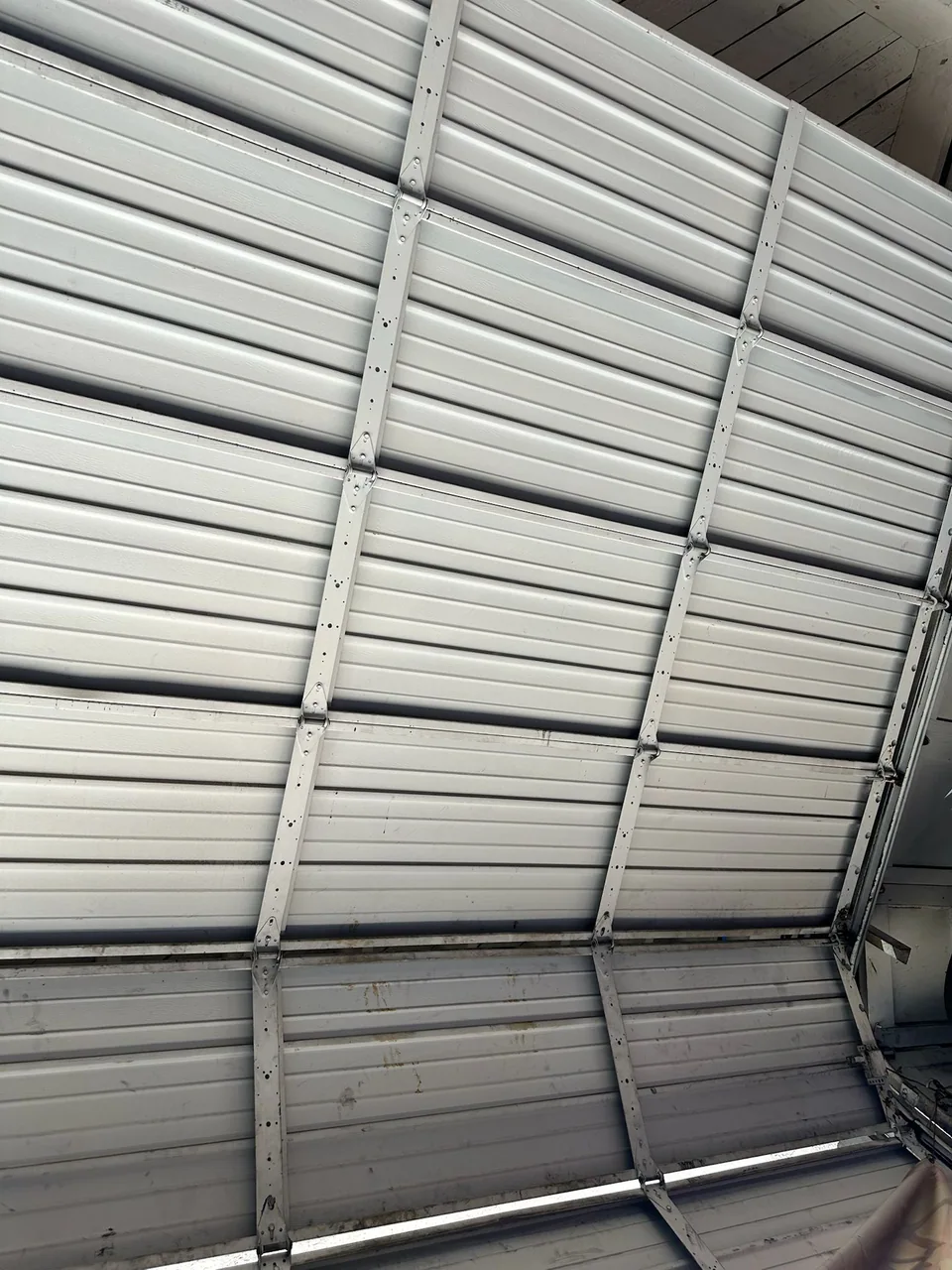
Off-track garage door repair / Trabuco Canyon, CA
Crooked. Jammed.
Leave it where it is.
A roller outside the track or a door hanging unevenly needs controlled assessment, not another attempt to open or close it.
The first priority is the opening
Do not push it back.
Do not run the opener.
A roller leaving its guide, a bent track and a cable problem can overlap. The visible position alone does not reveal all the damage or how the door is being supported.
Keep people away.
Stay clear of the opening and the space beneath the door. Do not stand under it, pull the release cord, remove hardware or try to guide a roller back into place.
Explain the urgency.
Tell the team if the door is stuck open, a vehicle is trapped or access cannot be secured. Confirm availability and timing directly; a callback request is not a confirmed attendance time.
Describe what changed.
Mention a recent impact, a loud noise, one corner dropping or a loose cable already visible from a safe position. Do not operate the door again to obtain a better description.
If the door is falling or someone is injured, move away and seek emergency help.
A repair enquiry is not an emergency-response channel. Keep others away from an immediately dangerous opening.
Recovery is not the same as a completed repair
Secure it.
Assess it. Repair the cause.
Putting a roller back in its guide does not prove the door is ready for normal use.
First, establish a controlled working condition
A trained technician needs to assess support, position and the affected hardware before moving the door. Do not attempt to brace or recover it yourself. Explain access constraints and any obstruction before the visit.
Then, establish the repair scope
Track sections and mounts, roller stems, hinges, panel edges, cables and spring balance may be relevant. The proposal should identify the damaged components and the reason the door left its normal path, not simply list a generic tune-up.
Finally, decide what can remain
A localized repair may be suitable if the retained components are sound. Bent sections, damaged attachment points or unavailable matching parts can change the options. Ask for the repair limits before considering a larger replacement.
The DASMA door safety labels identify cables, supports and spring-connected hardware as high-tension components requiring trained attention.
Before the technician leaves
Repaired, secured
or still out of use?
Agree on the outcome as well as the parts. A temporary securing visit should not be confused with a completed operating repair.
Explain the door position- Assessment: what caused the displacement, and is there associated cable, track, roller or panel damage?
- Required versus optional: which parts must change for the agreed repair, and which improvements can be declined?
- Price and approval: what are the assessment and attendance charges if no repair goes ahead? Is any assessment charge credited against approved work? Does the total include recovery, parts, labor, removal and tax?
- Parts delay: if a return visit is needed, can the door be secured, what must not be operated and what remains outstanding?
- Return to use: ask for even travel, hardware condition, balance and applicable opener safety checks to be explained after repair.
- Documentation: confirm any remaining restrictions and the actual parts, labor and return-visit warranty terms in writing.
Trabuco Canyon
Start with the service location
A useful first conversation
Door stuck open?
Vehicle trapped inside?
Lead with the immediate access or security problem. Then share the ZIP and the visible door position. A safe photo can help later; do not approach an unstable door to take one.
Check location and access details before arranging a visit.
Off-track repair questions
Understand
the recovery decision.
Is a tilted door definitely off track?
No. A cable or balance problem can leave a door uneven without an obvious displaced roller. Describe what is visible and stop operating it. Cable repair may be part of the assessment, but the cause should not be guessed from the tilt alone.
Can I push one roller back into the track?
No. Do not manipulate the roller, bend the track or loosen brackets. Other components may be under load, and restoring one visible part does not address why it moved. Leave recovery and assessment to a trained technician.
Does an off-track door always need replacement?
Not always. A repair may be possible when the affected components can be restored or replaced and the retained door is suitable. Structural damage, incompatible parts or the extent of panel damage may make replacement a separate option to discuss.
The door moved after the problem. Is it now safe?
Movement is not proof of a sound repair. A roller, cable or damaged track can remain unsafe even if the door moved once. Stop using it until the cause and affected components have been assessed.
What happens if the right panel or part is unavailable?
Ask whether the door can be secured pending a return visit, which parts remain outstanding, what the expected sourcing process is and what costs apply. Do not assume temporary securing means the opener can be used.
Can you guarantee the door will work on the first visit?
No first-visit completion guarantee is published here. The condition, access and suitable parts affect what can be completed. Explain the situation in advance and ask for the proposed outcome and any limitations before approving work.
Connected problems, different repairs
Follow the symptom.
Start with your door, not a diagnosis
Tell us what
has changed.
A door that will not lift. A loose cable. An opener that runs without moving the door.
Choose the closest match, or select "Not sure." A ZIP and a short description help the team understand the request before a visit.